
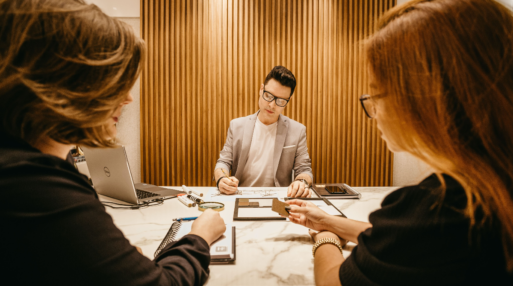
It’s not exactly controversial to say that divorce is a difficult experience. Even if you know it’s for the best, ending a long-term relationship can be emotionally exhausting and it takes some time and self-care to move past the split. When dealing with something as tough as a divorce, the last thing anyone needs is a grueling legal procedure, but that’s exactly what the traditional divorce litigation process includes. Even getting your case on the docket can mean months of waiting, and you might wind up having to sit in front of several different judges in several different courtrooms before it’s all over. The result is a process that’s both lengthy and highly impersonal, making your divorce a much more miserable experience than it has to be.
Private judging is an alternative divorce remedy that avoids a lot of the worst aspects of traditional litigation. This process initially grew in popularity due to the massive backlog of family law cases created by COVID-19, but it’s easy to see why more and more people are choosing it even after the courtrooms have opened up again.
Understanding Private Judging
Now that we’ve properly hyped up the private judging process, let’s dive into what it actually entails. A private judge is more or less what you’d expect: a professional third party who handles legal conflicts outside a traditional courtroom setting. While mediation can provide a similar out-of-court process the role of a private judge is distinct from that of a mediator.
For the most part, a mediator’s job is to encourage communication between two parties and help them come to a resolution together. Mediators have no authority to make legal decisions, but the mediation process guides people to a voluntary marital settlement agreement. In this way, a mediator is almost like a couples therapist – while they can provide input and help steer the conversation, it’s ultimately up to the divorcing couple to settle on an agreement. This provides plenty of flexibility, but can sometimes lead to a frustrating stalemate when the two parties can’t agree.
A private judge, on the other hand, does have the authority to make binding decisions. Even though the process is taking place outside a courtroom setting, a private judge still follows basic court procedures: they conduct hearings, receive evidence, and ultimately make judgments based on what they’ve heard. Unlike a courtroom judge, a private judge is also able to preside over every aspect of your case, allowing for a more holistic dispute resolution that takes your full situation into account.
For many divorcing couples, private judging is the perfect middle ground between litigation and mediation, retaining the structure and finality of the former but adding the efficiency, flexibility, and personal touch of the latter.

Tailored Divorce Solutions
Although private judges are appointed by the superior court and thus must follow all of the same rules that a state court judge would, the process has plenty of flexibility and can be customized to fit the particulars of your situation. One major advantage is that you can shop around and choose your own judge instead of having one assigned to your case. Every relationship is different and so is every divorce, so you want to find a private judge that has the experience you need to handle every aspect of your case. You also want someone you can build a rapport with since a private judge can oversee every step of the divorce process from start to finish. In a traditional courtroom setting, people are often stuck with one judge for the settlement conference, another one for the actual trial, a third for the custody dispute, and so on.
Having a single private judge handling every part of your divorce also means that you have plenty of opportunities to communicate one-on-one. In a courtroom setting, you’re generally sitting in front of a judge with countless other cases piling up on their desk, leaving very little time for actual human communication. It’s even more difficult when you have multiple judges working on different stages of the divorce process, each one with their own heavy caseload. A private judge has plenty of time to reach out to the parties involved, communicate clearly, and listen to what everybody has to say.
Having a private judge who can listen and respond to your concerns can make a world of difference. It’s easy to feel railroaded by the traditional litigation process, especially since divorce is such an emotionally difficult undertaking as it is. Even though a private judge is still the one making the decisions as the case proceeds, you still have input every step of the way.

Efficiency and Confidentiality
The efficiency of the private judging process is another major advantage. A private judge divorce in California can take as little as a few months, while the average courtroom divorce takes over a year from beginning to end. The length of the divorce process can vary wildly depending on the complexity of your case, but (somewhat counterintuitively) even simple cases can sometimes take forever because family court judges prioritize thorny issues like domestic violence and child custody when setting their schedules. That means it can take months for a time slot to open up for a hearing on property division or other financial matters.
Naturally, private judges don’t have the same scheduling issues. Sessions can take place in an office, someone’s home, or even online over Zoom or another video calling service. Private judges also manage their own caseloads instead of being assigned cases by the county allowing them to devote personal time to each one without being swamped. California’s six-month rule means that a divorce can’t be finalized until six months after the initial divorce Petition is filed and served,
so it’s impossible to make your divorce official in less than six months. However, depending on the complexity of your case, a private judge can often finish every aspect of the divorce before the six-month waiting period is up, allowing you to just relax and wait until it can be made official. Compare that to the traditional litigation process, which can take years, and the difference is pretty striking.
Private judges also offer significantly more privacy than a courtroom setting. Courts are public places, which means anyone and their brother could step into the room and watch your divorce proceedings unfold. While it’s generally a good thing to have more transparency in court, divorce cases usually involve some things we’d all rather keep private. Private judging sessions are completely closed to the public – that’s why so many divorcing celebrities prefer them. The only public record left behind by a private judge is the judgment itself, and there’s plenty of leeway for them to word those orders in ways that protect your private information.
If you’re interested in finding a private judge, feel free to give us a call. Formed during the COVID-19 pandemic by Sacramento family law attorney Neil Forester, Forester Family Law is a primarily virtual firm that blends creative ADR methods with discrete advisory counseling to help clients resolve a divorce, parenting dispute, or other family law conflict – outside the courtroom confines. Neil, a self-described “recovering litigator,” spent 18 years working in family law in Sacramento before discovering a passion for working outside the courtroom, and he brings the full weight of that experience to every case. If you’re interested in scheduling a consultation with Neil, you can contact us through our website here or give us a call at (916) 234-6060.